Cursive Alphabet Handwriting Practice: Fun Ways to Build Handwriting Skills
Cursive Alphabet Handwriting Practice: Fun Ways to Build Handwriting Skills Learning cursive handwriting takes practice, patience, and plenty of repetition. For young learners, structured handwriting worksheets can make that practice easier by giving children clear visual examples to follow. Cursive alphabet worksheets can help children become familiar with uppercase and lowercase cursive letters while developing better pencil control and handwriting habits. ✏️ What Is Cursive Handwriting Practice? Cursive handwriting practice gives children opportunities to learn how letters are formed and how they connect when writing words. A typical practice page may include: – A large cursive uppercase and lowercase letter– Directional or visual writing guides– A word associated with the target letter– Tracing practice– Repeated handwriting lines– Space for independent writing This combination allows children to move gradually from tracing to independent writing. This combination allows children to move gradually from tracing to independent writing.
Cursive Alphabet Handwriting Practice: Fun Ways to Build Handwriting Skills
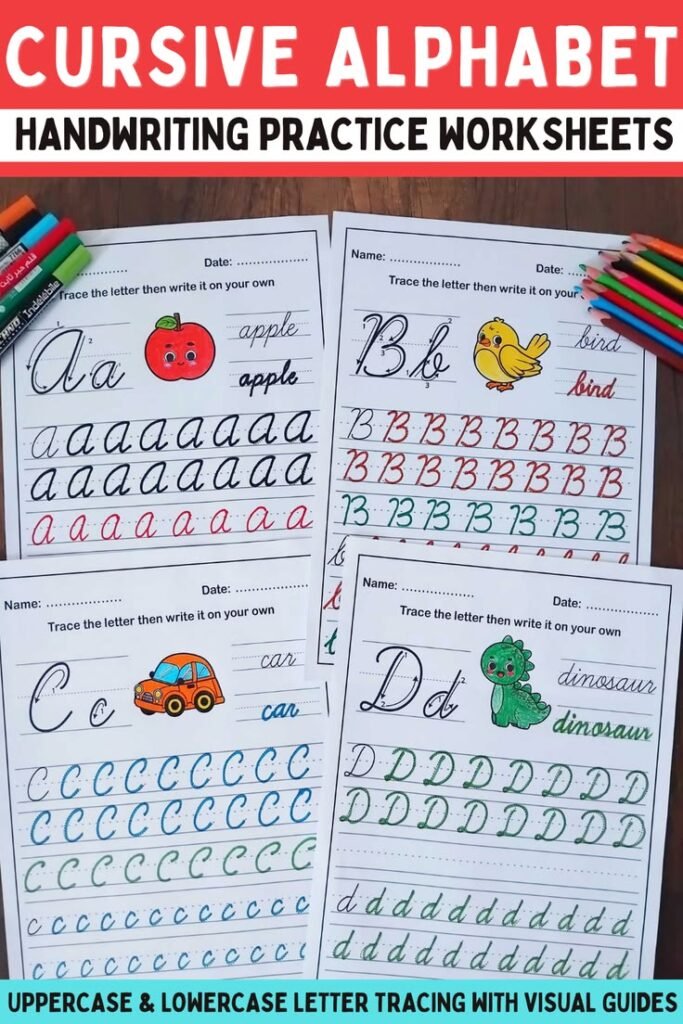
Learning cursive handwriting takes practice, patience, and plenty of repetition. For young learners, structured handwriting worksheets can make that practice easier by giving children clear visual examples to follow. Cursive alphabet worksheets can help children become familiar with uppercase and lowercase cursive letters while developing better pencil control and handwriting habits. ✏️ What Is Cursive Handwriting Practice? Cursive handwriting practice gives children opportunities to learn how letters are formed and how they connect when writing words. A typical practice page may include: A large cursive uppercase and lowercase letterDirectional or visual writing guidesA word associated with the target letterTracing practiceRepeated handwriting linesSpace for independent writing This combination allows children to move gradually from tracing to independent writing. 🔤 Practice Uppercase & Lowercase Letters One of the most useful features of alphabet handwriting practice is the opportunity to work with both uppercase and lowercase letters. Children can first study the letter formation, trace the examples, and then practice writing the letter repeatedly on their own. Working through the alphabet one letter at a time can help children become more comfortable with different cursive letter shapes. 🍎 Connect Letters With Familiar Words Handwriting practice can become more meaningful when letters are connected to familiar vocabulary. For example, children might practice: A — appleB — birdC — carD — dinosaur Using a picture alongside the word gives children a visual connection between the letter and the vocabulary they are writing. 🖍️ From Tracing to Independent Writing A good handwriting activity should give children the opportunity to gradually become more independent. Start with: This simple progression can make handwriting practice feel less overwhelming. 🌟 How to Make Cursive Practice More Engaging Handwriting doesn’t have to be repetitive or boring. Try incorporating these simple ideas: Let children use different colored pencils for each practice line.Encourage them to say the letter name as they write.Have them identify the picture and say the vocabulary word.Practice a few letters at a time rather than completing too many pages at once.Display finished handwriting pages to celebrate their progress.Pair handwriting practice with alphabet or literacy activities.📚 Perfect for Handwriting Practice Cursive alphabet worksheets can be useful for: Handwriting practiceCursive writing lessonsLiteracy centersMorning workIndependent practiceHomeschool activitiesSmall-group instructionAt-home practice They can also be used alongside other alphabet activities to give children different ways to interact with letters. 💛 Practice Makes Progress Learning cursive takes time. With regular practice and encouragement, children can gradually become more confident with letter formation and handwriting. Give young writers plenty of opportunities to trace, practice, and write independently, and remember to celebrate their progress along the way! Trace it. Practice it. Write it!