Cursive Alphabet Handwriting Practice: Fun Ways to Build Handwriting Skills
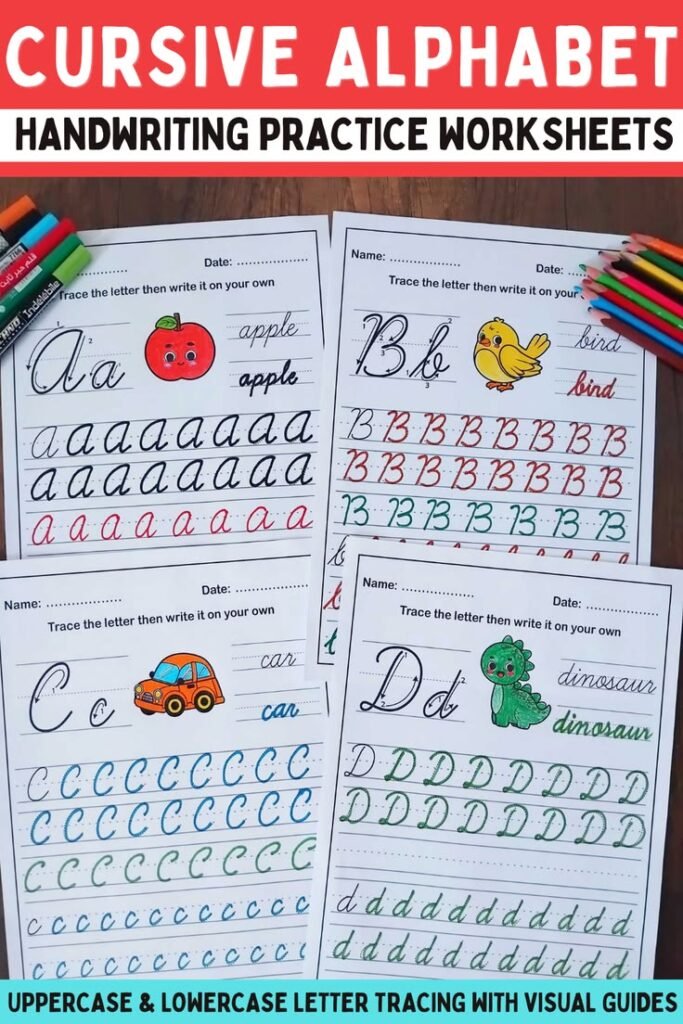
Learning cursive handwriting takes practice, patience, and plenty of repetition. For young learners, structured handwriting worksheets can make that practice easier by giving children clear visual examples to follow. Cursive alphabet worksheets can help children become familiar with uppercase and lowercase cursive letters while developing better pencil control and handwriting habits. ✏️ What Is Cursive Handwriting Practice? Cursive handwriting practice gives children opportunities to learn how letters are formed and how they connect when writing words. A typical practice page may include: A large cursive uppercase and lowercase letterDirectional or visual writing guidesA word associated with the target letterTracing practiceRepeated handwriting linesSpace for independent writing This combination allows children to move gradually from tracing to independent writing. 🔤 Practice Uppercase & Lowercase Letters One of the most useful features of alphabet handwriting practice is the opportunity to work with both uppercase and lowercase letters. Children can first study the letter formation, trace the examples, and then practice writing the letter repeatedly on their own. Working through the alphabet one letter at a time can help children become more comfortable with different cursive letter shapes. 🍎 Connect Letters With Familiar Words Handwriting practice can become more meaningful when letters are connected to familiar vocabulary. For example, children might practice: A — appleB — birdC — carD — dinosaur Using a picture alongside the word gives children a visual connection between the letter and the vocabulary they are writing. 🖍️ From Tracing to Independent Writing A good handwriting activity should give children the opportunity to gradually become more independent. Start with: This simple progression can make handwriting practice feel less overwhelming. 🌟 How to Make Cursive Practice More Engaging Handwriting doesn’t have to be repetitive or boring. Try incorporating these simple ideas: Let children use different colored pencils for each practice line.Encourage them to say the letter name as they write.Have them identify the picture and say the vocabulary word.Practice a few letters at a time rather than completing too many pages at once.Display finished handwriting pages to celebrate their progress.Pair handwriting practice with alphabet or literacy activities.📚 Perfect for Handwriting Practice Cursive alphabet worksheets can be useful for: Handwriting practiceCursive writing lessonsLiteracy centersMorning workIndependent practiceHomeschool activitiesSmall-group instructionAt-home practice They can also be used alongside other alphabet activities to give children different ways to interact with letters. 💛 Practice Makes Progress Learning cursive takes time. With regular practice and encouragement, children can gradually become more confident with letter formation and handwriting. Give young writers plenty of opportunities to trace, practice, and write independently, and remember to celebrate their progress along the way! Trace it. Practice it. Write it!
Alphabet Crafts for Preschool: Fun Cut-and-Paste Letter Activities
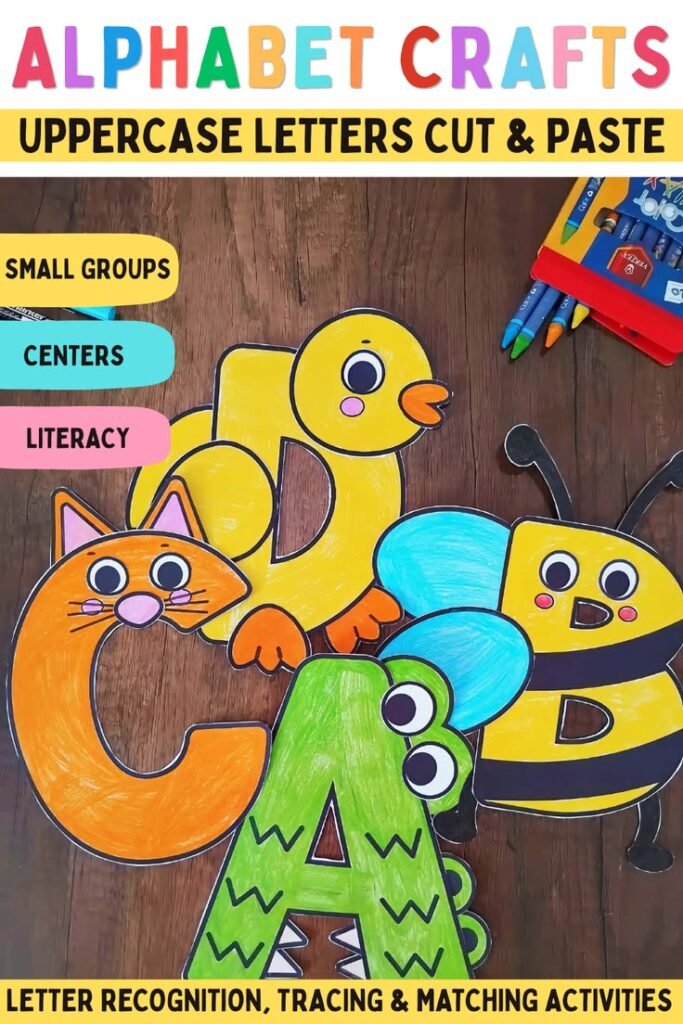
Learning letters becomes even more exciting when children can color, cut, paste, and create! Alphabet crafts are a fun way to combine early literacy practice with hands-on activities that keep young learners engaged. These uppercase alphabet crafts turn each letter into a colorful animal or character, giving children a creative way to practice letter recognition, tracing, matching, and fine motor skills. 🎨 Why Use Alphabet Crafts? Young children learn best when they can interact with what they are learning. Instead of simply looking at letters on a worksheet, children can color and assemble their own alphabet creations. Alphabet crafts can help children: ✂️ A Fun Cut-and-Paste Alphabet Activity These alphabet crafts feature uppercase letters transformed into cute, kid-friendly characters and animals. Children can color the pieces, cut them out, and put them together to create their letter craft. For example, the letter C can become a cute cat, while other letters can be transformed into different fun characters. The creative element makes the alphabet feel more playful and memorable. 🐱 How to Use Alphabet Crafts Setting up an alphabet craft activity is simple. 1. Introduce the Letter Start by showing children the target uppercase letter. Say its name together and talk about its sound. 2. Color the Craft Give children crayons, colored pencils, or markers and let them color their alphabet character. 3. Cut the Pieces Children can carefully cut out the different pieces of the craft. Younger learners may need adult assistance with cutting. 4. Assemble and Glue Help children identify where each piece belongs and glue the pieces together to complete their letter character. 5. Practice the Letter Once the craft is finished, encourage children to say the letter name and sound. You can also have them trace or write the letter. 📚 Great for Literacy Centers & Small Groups Alphabet crafts are especially useful when you want a literacy activity that combines learning with creativity. Try using them during: You can even display the finished crafts around the classroom to create a colorful alphabet wall! ✏️ Add More Alphabet Practice You can easily extend the activity beyond the craft itself. After children finish their creations, ask them to: This turns a simple craft into a complete early-literacy activity. 🌈 Learn, Create & Have Fun! Alphabet crafts give children a chance to learn through creativity. Coloring, cutting, gluing, tracing, and talking about letters all work together to create a playful learning experience. Whether you’re preparing a literacy center, planning a small-group activity, or looking for a fun alphabet craft for your classroom, these activities can make letter practice much more exciting. Cut, color, create, and learn the alphabet!
Alphabet Playdough Mats: A Fun Way to Practice ABCs
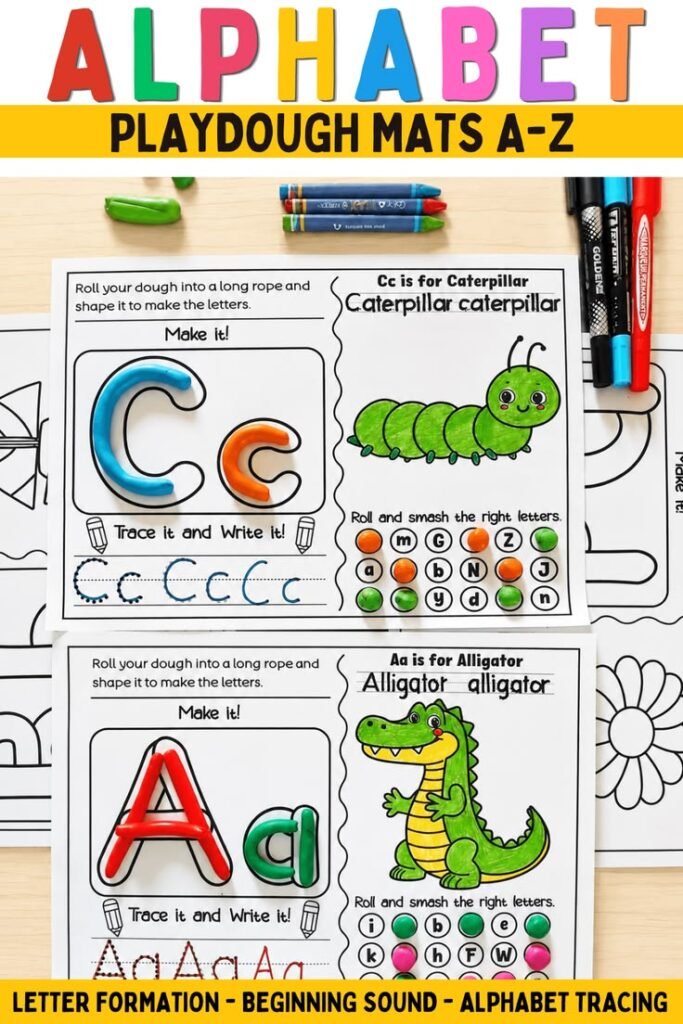
Learning the alphabet doesn’t have to mean sitting at a desk and filling out worksheets! Young learners love activities that let them touch, build, move, and create—and playdough is a wonderful way to make alphabet practice more hands-on. Alphabet playdough mats give preschool and kindergarten children an engaging way to practice letter formation, alphabet recognition, beginning sounds, and tracing while having fun with colorful playdough. 🎨 What Are Alphabet Playdough Mats? Alphabet playdough mats are printable learning activities that children can use with playdough to build uppercase and lowercase letters. Children can roll playdough into long ropes and shape the dough to form each letter. After building the letter, they can practice tracing and writing it. The mats can also introduce a vocabulary word and picture connected to the target letter—for example, an alligator for A or a caterpillar for C. This makes alphabet practice more meaningful because children are connecting the letter, sound, and picture together. ✋ Skills Children Can Practice Alphabet playdough activities can support several important early-learning skills: -Letter Formation Rolling and shaping playdough into letters gives children a hands-on way to become familiar with how letters are formed. -Fine Motor Skills Rolling, squeezing, pressing, and shaping playdough helps children exercise the small muscles in their hands and fingers. -Alphabet Recognition Repeatedly working with uppercase and lowercase letters helps children become more familiar with the alphabet. -Beginning Sounds Pairing each letter with a familiar picture gives children an opportunity to connect letters with their beginning sounds. -Letter Tracing After making the letters with playdough, children can move on to tracing and writing practice. 🐊 How to Use Alphabet Playdough Mats You don’t need many materials to set up this activity. Simply print the mats and provide some playdough. Here is a simple routine: 1. Introduce the letter.Talk about the letter and its sound. 2. Look at the picture.Say the vocabulary word together and emphasize the beginning sound. 3. Build the letter.Have children roll their playdough into a long rope and use it to form the target letters. 4. Trace and write.Once they have built the letters, encourage children to trace and practice writing them. 5. Practice letter recognition.Children can also use playdough to “smash” or cover the correct letters as they identify them. 🌈 Make Alphabet Practice More Fun You can turn the mats into an alphabet center by placing them in a tray with several colors of playdough. Try asking questions such as: You can also let children choose their favorite playdough colors and decorate their letters after forming them. 📚 Perfect for Preschool & Kindergarten Alphabet playdough mats can be used in many different settings, including: They are especially useful when children need a break from traditional pencil-and-paper activities. 💛 A Simple Way to Learn Through Play The best early-learning activities don’t always feel like “work.” When children are building letters with their hands, identifying pictures, practicing sounds, and tracing letters, they are developing important foundational literacy skills while enjoying the process. So grab some playdough, choose a letter, and let the alphabet learning begin! Color, build, trace, and learn—one letter at a time!